

In this article, you’ll learn:
- why LinkedIn matters for founder-led sales
- what Hub71 founders worked on in the session
- how positioning, content, and profile optimisation connect
- why founder visibility only matters when it supports pipeline
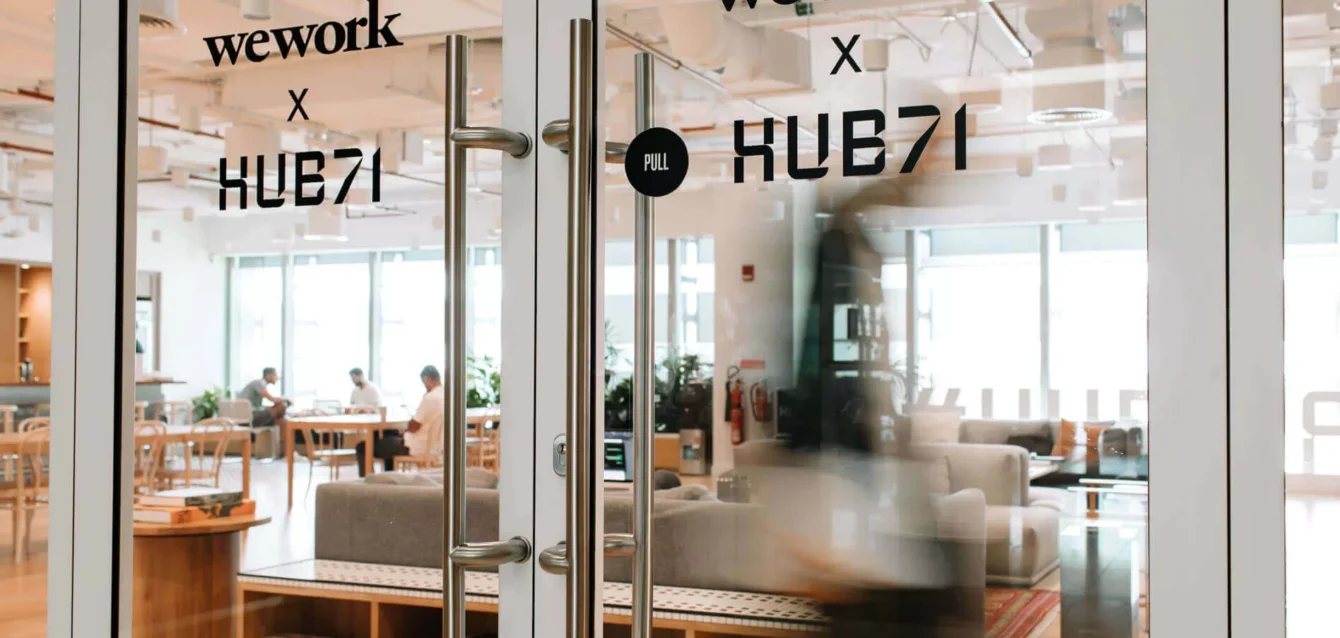
This article is based on the workshop I delivered with Hub71 in October 2025 and the practical exercises founders completed during the session.
Table of Contents
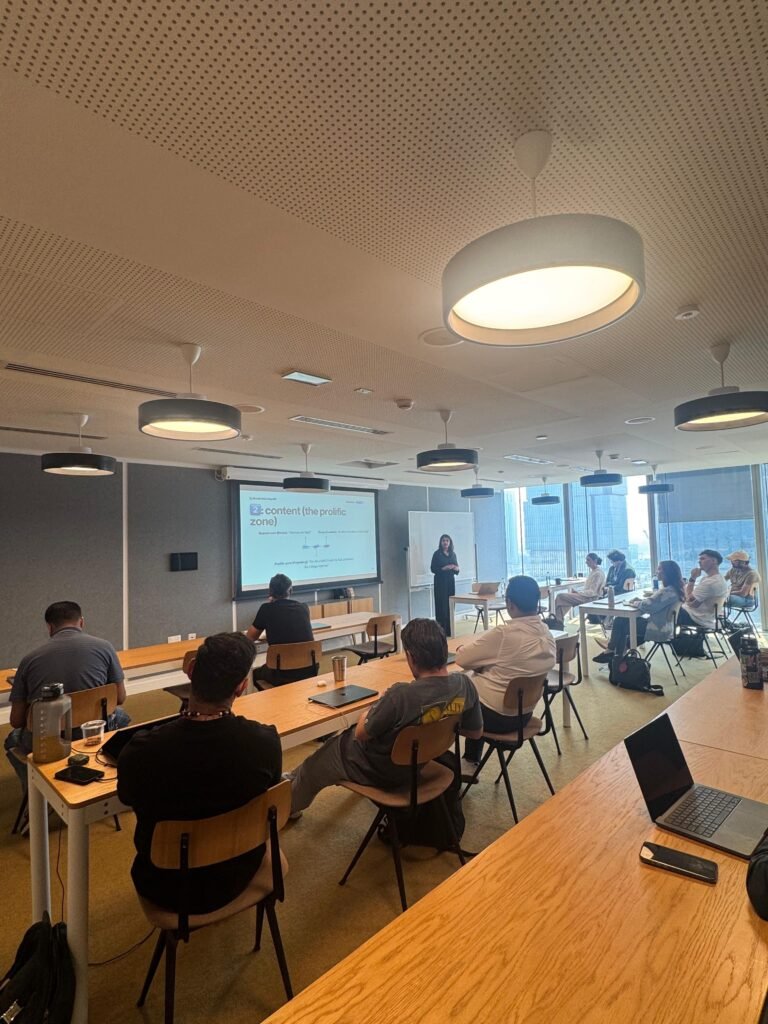
In October 2025, I delivered a workshop with Hub71 on a topic many founders still underestimate: how to use LinkedIn to drive sales without turning yourself into a full-time content creator. The session, titled Founder Branding & Growth Tactics: How to Drive Sales Through LinkedIn, was designed to help founders move from passive visibility to a more structured founder-led sales motion.
The problem was not that founders did not believe LinkedIn mattered.
The problem was that most of them were still using it the wrong way.
Across startups and scale-ups, I kept hearing the same concerns:
- “I’m too busy building my product to post.”
- “My profile is just a resume.”
- “I don’t know what to say.”
- “It feels like bragging and it doesn’t lead to sales.”
That is exactly why this session mattered.
Because for many B2B founders, especially in the UAE and GCC, LinkedIn is not just a visibility channel. It can become a structured commercial asset when used properly.
The Real Shift: From Resume to Revenue Asset
One of the biggest mindset shifts in the workshop was simple:
LinkedIn is not a digital resume. It is part of a sales system.
I made this contrast explicit:
- the old way: passive, historical, “look at me”
- the new way: active, future-focused, “how I help you”
That distinction matters because many founders still treat LinkedIn as a place to list titles and experience.
But if you are building a B2B company, your profile should do more than describe your past.
It should help a buyer understand:
- who you help
- what problem you solve
- why you are credible
- and what they should do next
That is not a branding exercise for ego.
It is a commercial clarity exercise.
Why LinkedIn Was the Right Channel for Hub71 Founders
The workshop made a practical case for LinkedIn as the default B2B platform. I highlighted its scale, its role in B2B lead generation, and the fact that decision-makers are already there.
But the stronger point was more strategic than statistical.
For many founders, especially in early-stage and growth-stage B2B companies, LinkedIn is one of the few places where:
- positioning
- authority
- trust
- ecosystem visibility
- and pipeline conversations
can all reinforce each other.
That becomes even more relevant in the UAE and GCC, where business is still highly relationship-driven. The session addressed this directly through local tactics such as engaging with ecosystem leaders, tagging relevant entities, and anchoring the founder’s voice in local market context.
What We Actually Worked On
This was not a generic personal-branding talk.
It was a hands-on working session built around three specific pillars.
1. Positioning
Founders were first asked to define what they wanted to be known for.
The framework used in the workshop was the “3Cs”:
- Clear
- Consistent
- Constantly reinforced
That sounds simple, but it is where many founder profiles break.
They are often too broad, too internal, or too focused on title rather than outcome.
The point of the exercise was to push founders toward a sharper commercial identity: not just who they are, but what they want the market to associate them with.
2. Content
The second pillar focused on content, but not in the generic “post more often” way.
The workshop introduced the idea of a founder’s prolific zone: content that is neither bland nor performative, but useful, specific, and grounded in a real point of view.
Founders were then guided to shape their first three posts around:
- Why: a personal story, lesson, or vulnerability
- How: expertise or a counterintuitive opinion
- What: a product win or customer outcome
This mattered because many founders think they need a large content machine.
In reality, most of them first need:
- a clearer narrative
- a stronger point of view
- and a more useful way to connect their expertise to buyer trust
3. Profile
The third pillar treated the LinkedIn profile as a landing page.
I was very explicit on this point: your profile is not a resume. It has one job: convert a visitor into a lead.
Founders were guided through a 10-minute profile fix focused on:
- banner
- headline
- link
- about section
- featured section
The strongest shift here was moving away from:
Founder & CEO at [Startup Name]toward a headline that clearly explains:
- who you help
- what outcome you create
- and how your business is relevant to the buyer
That is a small change with an outsized commercial impact.
Founder-Led Sales Needs More Than Visibility
The workshop did not stop at profile and content.
That is where many founder-branding sessions fall short.
The second half focused on acquisition and conversion:
- identifying the exact ICP
- building a “Dream 10” prospect list
- avoiding cold, trust-destroying outreach
- and using a slower, warmer path into conversation
One of the most useful framework was the “30-day rule”:
- connect first
- post consistently
- build familiarity
- then start the conversation later
That matters because most founders still approach outreach too early and too cold.
They try to use LinkedIn as a direct response channel before they have built any trust.
The workshop reframed that completely: conversations first, pitches later
That is a much healthier founder-led sales dynamic.
What Founders Left With
By the end of the session, founders had not just heard a framework.
They had done the work. In roughly 120 minutes they had:
- defined their founder brand position
- optimised their LinkedIn profile
- developed three post ideas
- built a dream 10 ICP list
- and drafted a warm outreach script
The workshop then translated this into a practical 7-day founder growth plan:
- finalise the profile
- write and schedule the “Why,” “How,” and “What” posts
- connect with dream prospects
- comment on ecosystem leaders
- and continue expanding the target list
That is important.
A good workshop should not leave founders with inspiration alone.
It should leave them with assets, momentum, and a path to execution.
Why This Matters Beyond LinkedIn
This Hub71 session was ultimately about much more than posting on LinkedIn.
It was about helping founders connect:
- what they want to be known for
- who they want to be known by
- and how that visibility should turn into commercial conversations
That is why I do not think of this work as “personal branding.”
Done badly, founder visibility becomes noise.
Done well, it becomes part of a founder-led sales system.
And for many startups, especially in relationship-driven B2B environments, that can become a serious growth lever.
Final Thought
The strongest founder-led sales systems usually start with clarity, not volume.
Clarity on:
- what you want to be known for
- who you want to attract
- what your profile says when someone lands on it
- and how your visibility supports trust instead of just attention
That is what this Hub71 workshop was really about.
Not visibility for its own sake. But visibility structured well enough to support growth.
Want help turning founder visibility into a more structured growth system?
Explore how we work
If your company is growing but your positioning, founder-led sales motion, or LinkedIn profile still feels loose, that is usually a sign the commercial system underneath it needs work.
Explore how I work with founders and growth-stage teams through:
• Revenue Architecture Diagnostic
• Revenue Architecture Blueprint
• Fractional Revenue Architecture Advisory
FAQ: Founder-led sales on LinkedIn by Ahlem Mahroua
Why did Hub71 founders need a workshop on LinkedIn in the first place?
Because many founders still use LinkedIn passively.
They know they should be visible, but their profile reads like a resume, their content is inconsistent, and their outreach is too cold. The workshop was designed to help founders use LinkedIn as part of a more deliberate founder-led sales system, not just a visibility channel.
Was this workshop about personal branding or sales?
It was about sales.
More specifically, it was about helping founders connect their positioning, content, profile, and outreach into a clearer path toward trust, conversations, and pipeline. The workshop explicitly reframed LinkedIn from a passive profile into an active commercial asset.
What was the main mindset shift in the Hub71 workshop?
The biggest shift was this:
LinkedIn is not a digital resume. It is part of a founder-led sales system.
That means founders need to stop thinking only about titles, credentials, and past roles, and start thinking about:
who they help
what outcome they create
and how their profile and content support conversion.
What did founders actually work on during the session?
The session was hands-on.
Founders worked on three main areas:
positioning through the 3Cs: clear, consistent, and constantly reinforced
content through “Why / How / What” post ideas
profile optimisation so the LinkedIn profile works more like a landing page than a resume.
By the end of the session, they had also built a target prospect list and drafted a warm outreach script.
Why is LinkedIn especially relevant for founders in the UAE and GCC?
Because business in the region is still highly relationship-driven.
In that context, founder visibility is not just about reach. It helps buyers, partners, and ecosystem players understand who the founder is, what the company stands for, and whether the business sounds credible in-market. The workshop addressed this directly through UAE/GCC-specific engagement tactics and ecosystem visibility.
What is the difference between founder visibility and founder-led sales?
Founder visibility creates awareness.
Founder-led sales turns that awareness into trust, conversations, and eventually pipeline.
The difference is structure. A founder can be visible online and still generate very little commercial value. The workshop focused on building the missing links between positioning, profile, content, ICP targeting, and outreach.
What did founders leave with after the Hub71 workshop?
They left with assets they could actually use.
They had:
defined their founder brand position
improved their LinkedIn profile
developed three content ideas
built a “Dream 10” ICP list
and drafted a warm outreach script.
That matters because momentum is often the difference between a workshop that feels useful and one that actually changes behaviour.
If your business is feeling operationally steady on the surface but fragmented underneath, that usually shows up first in communication, prioritization, and stakeholder confidence.
Explore nova*’s Growth Systems Audit
That is exactly where better growth architecture matters.



Comments
[…] For founder-led B2B sales, LinkedIn is often the highest-priority paid platform to run from day one, particularly when brand credibility and decision-maker access matter more than volume. We outline a practical founder-led LinkedIn approach in How We Helped Hub71 Founders Turn LinkedIn Into A Founder-Led Sales System | Nova*. […]
[…] new ideas every day. Used well, these are genuinely effective AI tools for creators trying to maintain a presence without a dedicated content […]